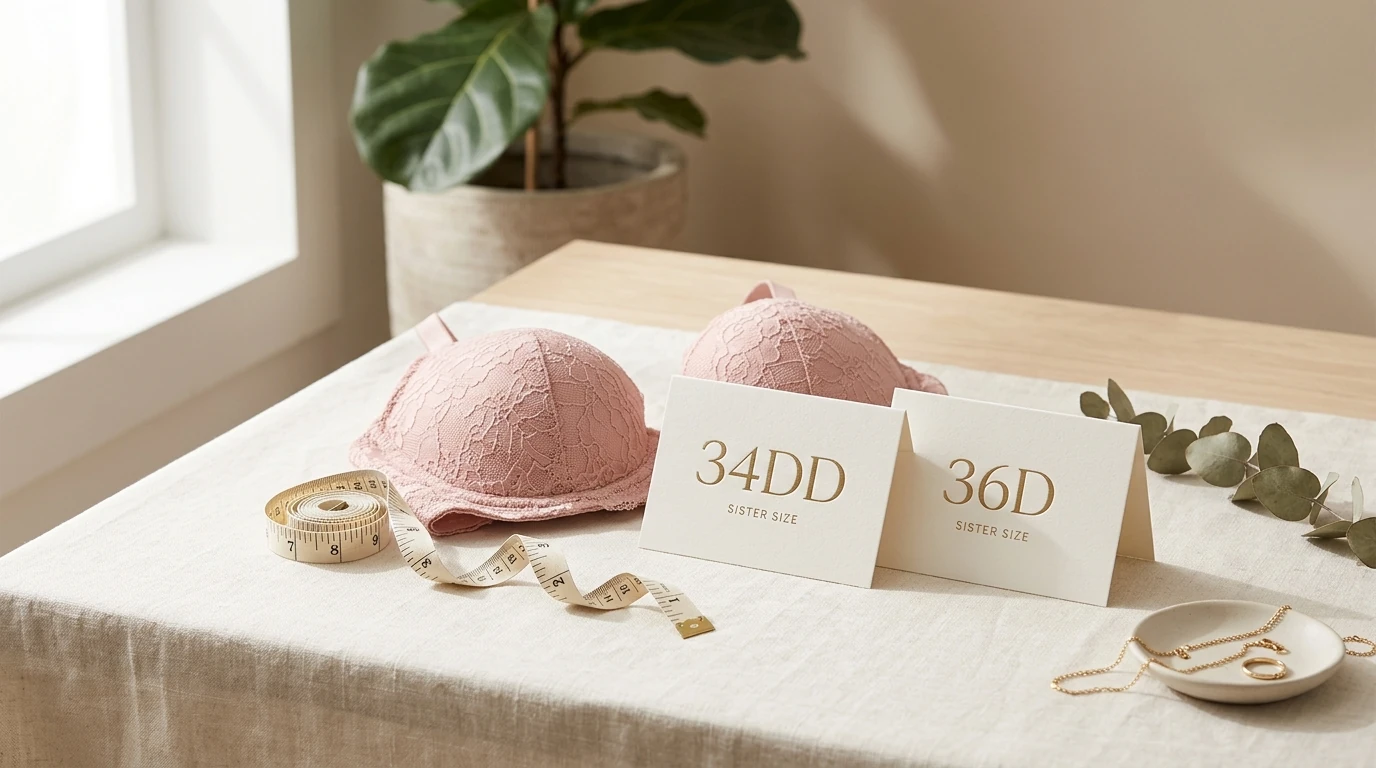
If you have asked, is 34DD the same as 36D, the short answer is no. They have similar cup volume, but they do not fit the same way.
That is the basic idea behind bra sister sizes. When you go up a band size, you usually go down a cup letter to keep the cup volume close. So 34DD and 36D are sister sizes. The cups may hold a similar amount of breast tissue, but the band tension, wire width, and overall feel change.
That difference matters. The band provides most of the support, and small changes in band size can change how secure or comfortable a bra feels. If you need a starting point before testing nearby sizes, use the bra size calculator and compare the result with your current fit.
Short answer: is 34DD the same as 36D?
34DD and 36D are sister sizes, not identical sizes.
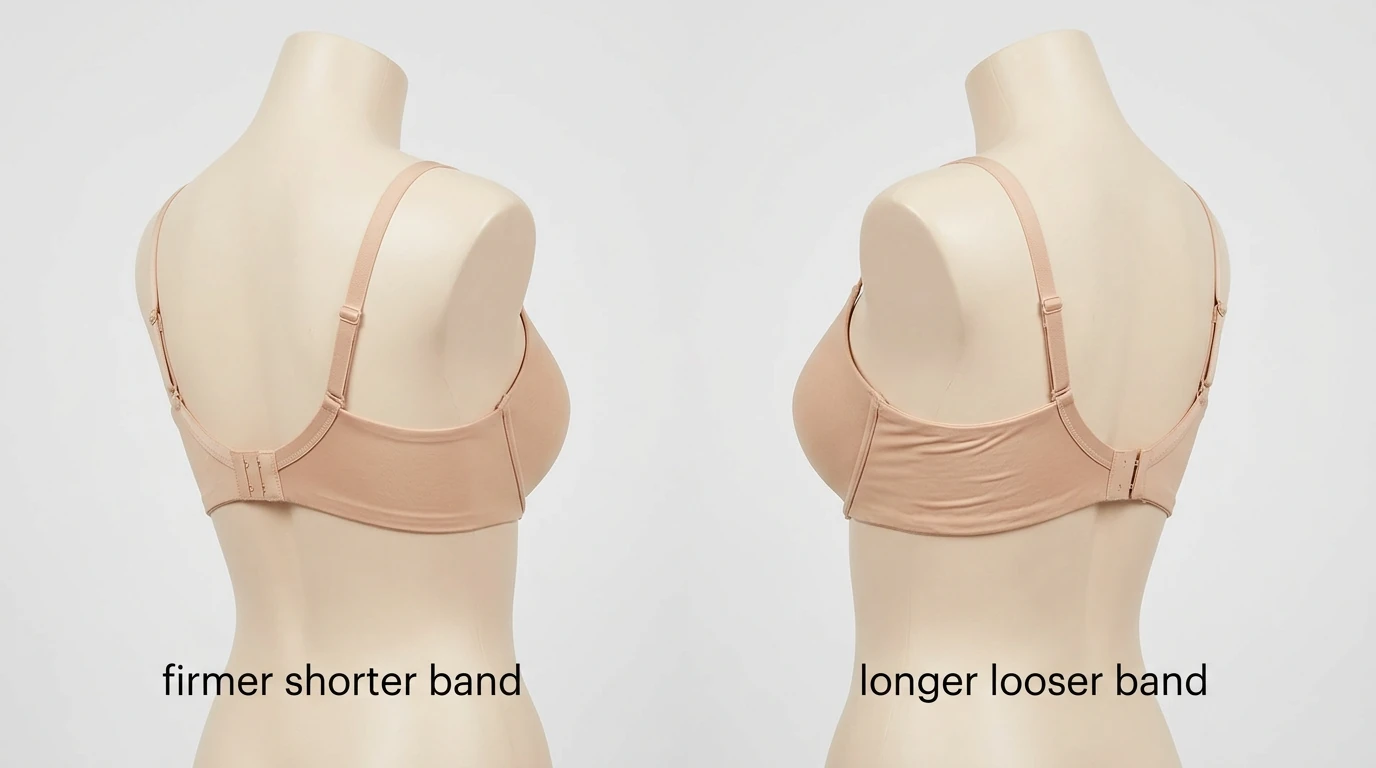
They are close in cup volume, which is why both sizes may work in different bras. The 36D band is longer and usually looser, while the 34DD band is shorter and usually firmer.
In practice, 34DD may feel more anchored, while 36D may feel easier to fasten but less supportive if your band is already borderline loose. The underwires, cup shape, and strap placement can also shift slightly between the two sizes.
The better question is whether the whole bra still supports you well, not only whether the cups match.
What “sister sizes” actually means
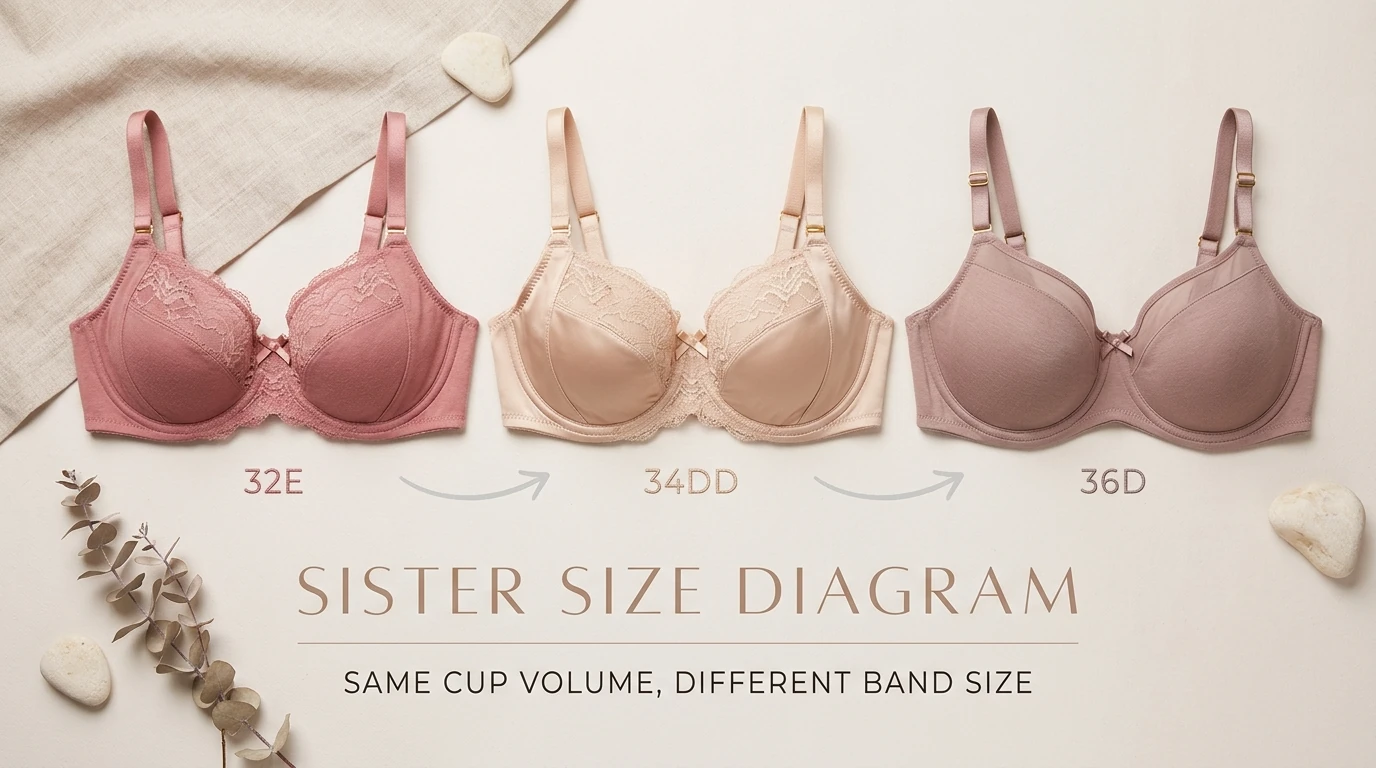
Sister sizes are bra sizes with a similar cup volume across different band sizes. If you go up one band size, you usually go down one cup letter. If you go down one band size, you usually go up one cup letter.
For example:
| Size relationship | Sister size |
|---|---|
| 34DD up one band | 36D |
| 34DD down one band | 32E |
| 36D down one band | 34DD |
Bra sizing is a ratio, not a fixed cup shape. The cup letter only makes sense with the band number attached.
Why the cups can match but the fit still feel different
Sister sizing works best when you understand its limit: similar volume does not mean identical fit.
Band tension changes support
Most bra fit educators and retailers agree that the band does most of the support work. A firmer band usually holds the cups and wires in place better than a loose one, so changing from 34DD to 36D can change the feel even if the cup volume stays close.
You might notice more movement in the band, straps doing extra work, or the center gore, the piece between the cups, not sitting as firmly.
If your bra already rides up, slips around, or leaves you adjusting the straps all day, moving to a looser band may make the problem worse. Check the signs of a bad bra fit before you rely on a sister size.
Cup shape, wire width, and bra style still matter
Even when two sizes have similar volume, the bra may distribute that volume differently. A molded T-shirt bra, an unlined balconette, and a plunge bra can all fit differently in the same size.
Band changes can also affect:
- wire width: a larger band often comes with slightly wider wires
- cup proportions: the cup may feel taller, wider, or shallower
- strap placement: straps may sit farther apart on a larger band
A sister size can look right on paper but still gap, cut in, or feel unstable in real wear. If cup shape mismatch is already part of the problem, understanding your breast shape can help more than changing sizes at random.
When sister sizing helps
Sister sizing is useful in a few common situations.
The band feels too tight but the cups fit
If the cups fit well and the band feels uncomfortably firm on the loosest hook, trying one band size up and one cup letter down can make sense. For example, if 34DD feels restrictive in the band but the cups contain your tissue well, 36D is a logical test size.
This is common when a brand runs tight, the fabric has less stretch, or you are between band sizes.
The band feels too loose but the cups fit
If 36D feels loose in the band but the cups look right, 34DD may give you similar cup volume with better support.
This can help if the band rides up, the straps keep slipping because the frame is not anchored, or the cups seem fine but the bra shifts as you move.
Your usual size is sold out or a brand fits differently
Sister sizes also help when inventory is limited or a brand fits unusually snug or stretchy. Use them as a one-step adjustment, not a full workaround for a poor fit.
When sister sizing can make the fit worse
Sister sizing is not the fix for every bra problem.
You already have spillage, gaping, or a floating gore
If the cup is cutting in, gaping badly, or the center gore is floating away from your sternum, the issue may be cup size, cup depth, or shape mismatch rather than band size alone.
In that case, sister sizing can hide the real problem. A looser band may reduce pressure for a moment while making support worse. A tighter band may pin the bra in place while the cup shape still does not match your body.
Start with solid measurements first. If you need a refresher, this guide on how to measure bra size and the right measuring tape for bra sizing will help you reset before you test nearby sizes.
You move more than one band step away
One sister size up or down is common. More than that usually changes the fit too much.
For example, moving from 34DD to 38C may keep you in the same rough volume family, but the proportions will often feel very different. The wires may be too wide, the straps may sit awkwardly, and the band may stop doing its job.
If you need to move multiple steps to get comfortable, you likely need a new base size or a different bra shape, not just a sister size.
How to test a sister size in the fitting room
When you compare 34DD and 36D, check more than the cup.
- Fasten the bra on the loosest hook if it is new.
- Scoop all breast tissue into the cups before judging the fit.
- Check whether the band stays level across your back.
- See whether the center gore sits close to your sternum without digging.
- Raise your arms and move around to see if the bra shifts.
If one size feels better for ten seconds but slides, rides up, or needs constant adjustment, it is probably not the better size.
Start with your measured size, then adjust from there
Sister sizes work best as a fine-tuning tool rather than a substitute for a good starting measurement.
If you are deciding between 34DD and 36D, remember:
- they have similar cup volume
- they do not give the same band support
- the same sister size can fit differently across brands and styles
- one step up or down is usually the safe range to test
Start with your measured size, use a sister size only when the cups seem right but the band does not, and judge the fit by support, stability, and comfort together.